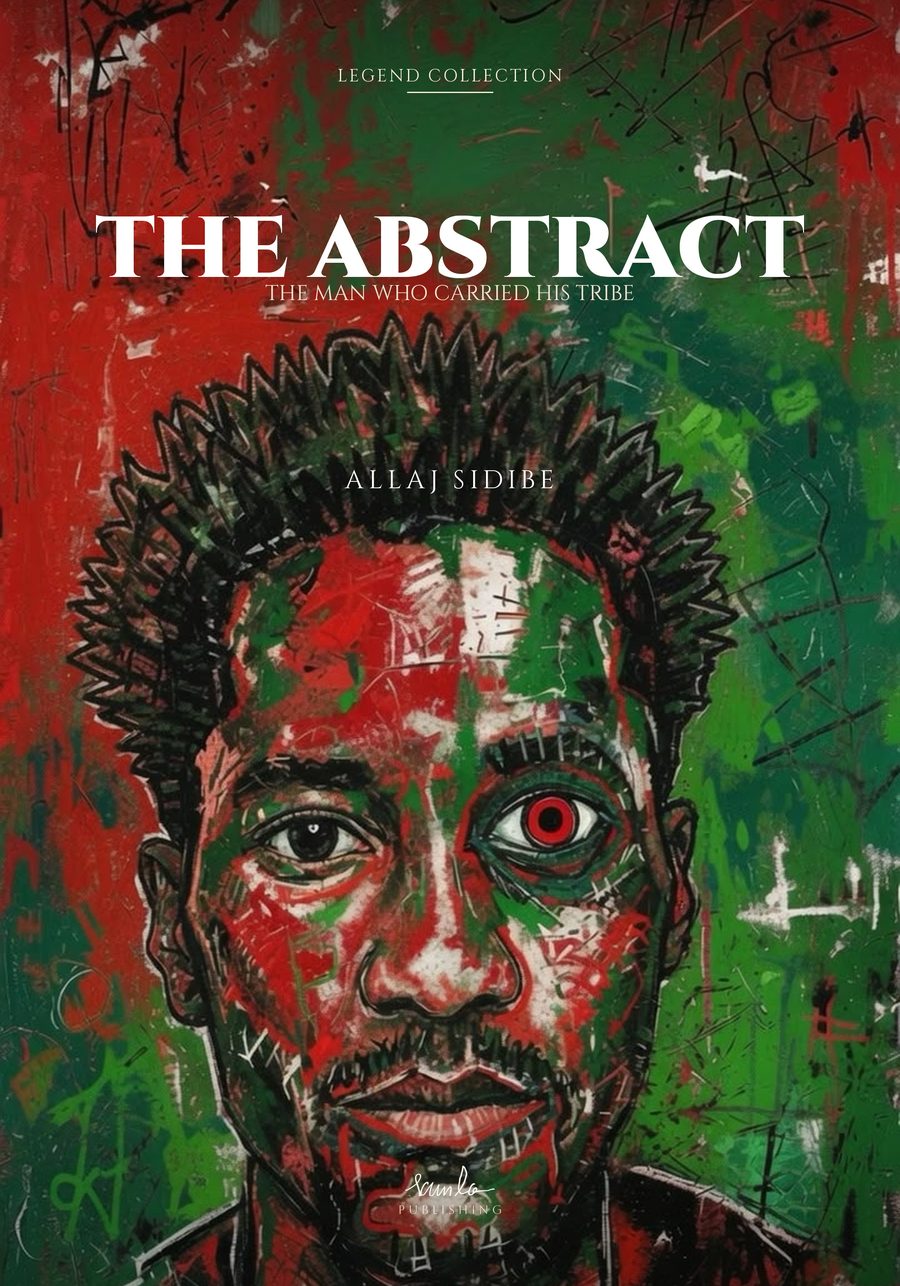
Cover of The Abstract
Legend · Volume III · Bilingual

The Abstract

Q-Tip, The Man Who Carried His Tribe
Allaj Sidibe
Coming in 2027
“This is the story of a man who chose to make kings rather than be one.”

Élysée Montmartre, Paris, winter 1993. A young man hears, for the first time, a rapper who articulates differently, slower, quieter. Thirty years later, he writes this book.

Harlem, Queens, the Native Tongues. A Tribe Called Quest earns the five mics. Q-Tip produces Nas, Mobb Deep, Mariah Carey. He builds careers for others before his own.

Rock & Roll Hall of Fame, 2024. Fifty years of a man who dissolved his name into the name of a group.

Contents
  1. Opening
  2. Sample
  3. Low End
  4. The Loop
  5. The Break
  6. The Bridge
  7. Outro
Format
Portrait essay
Pages
125
Release
Coming in 2027
Series
Legend
Languages

Get notified on release

The Abstract: coming in 2027. Leave your email and we will write to you on release day. One message, no newsletter.

Excerpt from The Abstract

Excerpt from the book922 words · 4 min read
Opening

The Sleeve Credit

“I never wrote ‘produced by Q-Tip.’ That wasn’t the point. It was Tribe.” — Q-Tip, Red Bull Music Academy, 2013

It is winter 1993. The Élysée Montmartre is packed to bursting, the room already sweating, and I am there, somewhere in the crowd, waiting for the group I have been playing on a loop for months. Midnight Marauders has just come out. That is why we came.

The lights go down. A man steps forward on the stage in a purple hooded sweatshirt, the hood pulled up over his forehead, and he throws out a name the way you throw down a watchword. Steve Biko. It is the track that opens the record, and tonight it opens the night. The bass drops. The whole room lifts off.

I do not grasp, in that moment, everything the name carries. Steve Biko, the South African militant beaten to death under apartheid. Not a boast, not a stage slogan: a martyr, thrown in the face of a Paris crowd in the very first second. All the conscience of this group is there, in that choice of an opening. They do not come only to make you dance. They come to say something.

And in the middle of it all, the man in the purple hood. He holds the room in his hand. He leads, he starts it up again, he passes the mic, he comes back. But at no moment does he put himself out front. There is another man beside him, smaller, more nervous, who bites down on every syllable, and the current passes back and forth between them without stop. I do not know it yet, that night, but the man under the hood, the one who directs the whole night without ever demanding the light, is the one I will spend years wanting to understand. They call him Q-Tip. And this book begins here, in this room, that winter.

Keep reading the excerpt

It took me a long time to understand what I had seen. Not a singer in front of his group. Something else. A man who hides inside his own music.

The proof is on the records. Take any A Tribe Called Quest album. Turn it over. Look, in small print, for the line no one ever reads, the one with the production credits. You will not find the name you would expect. Not “produced by Q-Tip.” Four words in its place, and always the same: produced by A Tribe Called Quest .

The man who made these records does not sign with his own name. He signs with the group’s.

We have had this detail before our eyes for thirty years without reading it. This is not a biographer’s thesis, a reading that would have to be defended: it is printed on the sleeve, in black and white, verifiable by anyone who turns the record over. And the gesture repeats, album after album, then beyond. When Q-Tip begins to produce for others, he soon does it under one more name, The Ummah, which in Arabic means the community, the collective. A word that means “we.” Always the group in front. Always the “we” in place of the “I.”

Now that “we,” musically, was largely him.

Lead producer from the first album, the ear, the architect of the sound, the keeper of the vision. He built the edifice and shared the mic, letting a collective effort be assumed where the hand, at first, was his. Then he found himself a nickname that says exactly what those credits say. He called himself the Abstract. Do not look for a face: listen to the sound.

From this threshold on, you have to hold two truths at once, for it is their tension that makes the man. This self-effacement came from more than modesty or calculation. It was an ethic. The hip-hop he comes from, that of the Native Tongues, believed in the group, in the family, in the “we” raised against the cult of the self. Q-Tip did not hide himself by temperament alone: he embodied a certain idea of what musicians owe one another. The invisible architect and the man faithful to a shared vision. Both together. It is truer that way, and it is more beautiful.

That is what makes him the third face of a single collection, and the most unsettling. Before him, we told of two men and their statues. Michael Jackson, over whom a machine raised a statue he had not asked for, and which crushed him. Freddie Mercury, who built one with his own hands, a mask to hide inside and, in hiding, be free. He has no statue. He did the opposite: he dissolved his own into a group’s, then into that of the artists he raised up. Where one endured his glory and the other fled it, he chose something else. Transmission. This is the story of a man who preferred to make kings rather than be one.

This book starts from that line on the sleeve, and it answers: look closer. Behind the four words, there is a single man. The whole portrait follows from that.

One last thing before we go in. This man gives little of himself to be seen, and it is deliberate. To know him there is only one path, the same one he holds out to us from the start, finger to his lips, on the cover of this book. The same one he held out to me, one winter night, under a purple hood, at the Élysée Montmartre. Read, and listen.

End of excerpt.