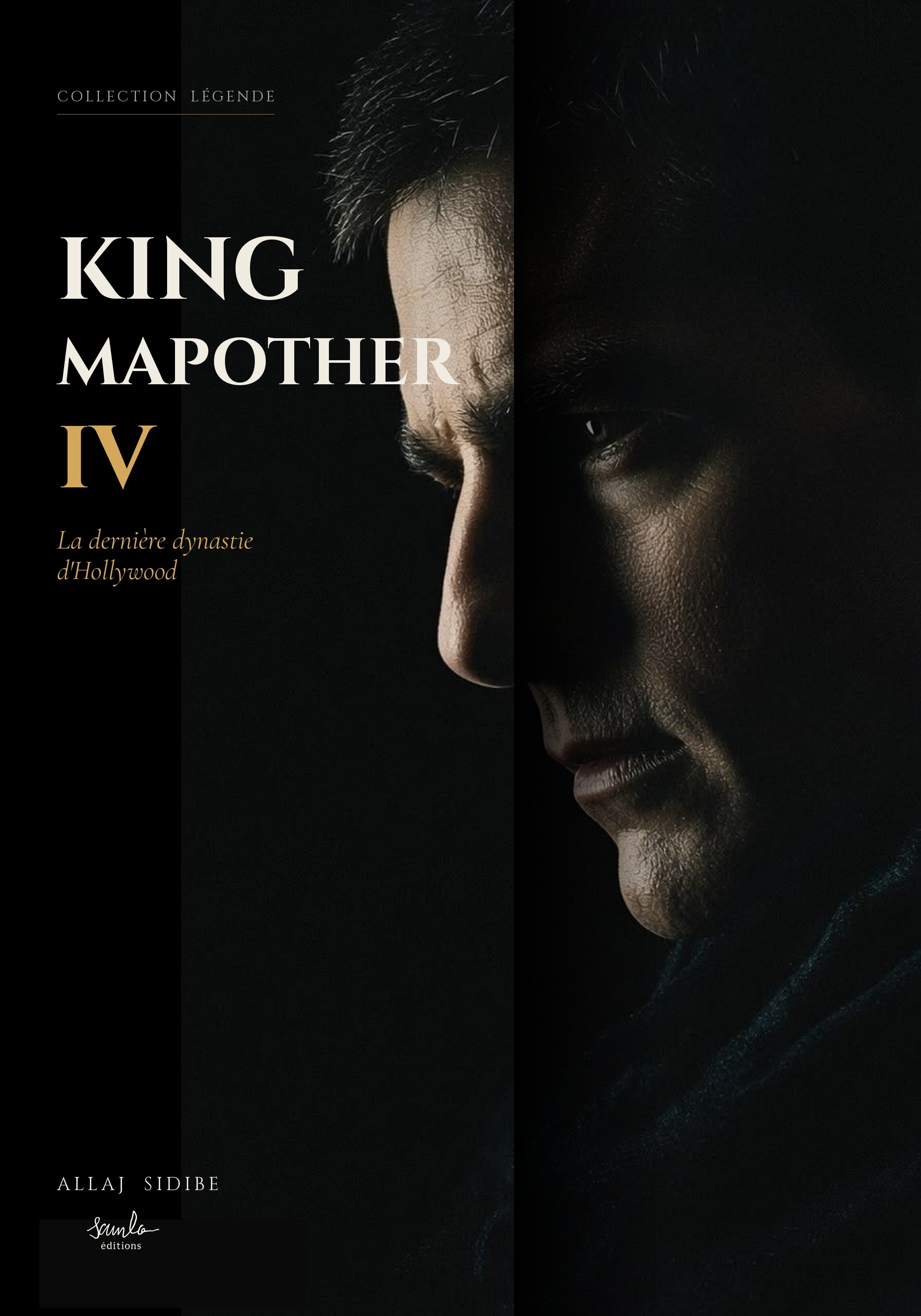
Couverture de Amblin
Légende · Volume V · Bilingue

Amblin

Steven Spielberg, ce qu'il a fabriqué
Allaj Sidibe
Sortie courant 2027
« Un mardi de 1982, une petite fille de six ans a pleuré à la sortie d'une salle de cinéma en France. »

Phoenix, Arizona, décembre 1957. Un enfant de onze ans reçoit un train miniature pour son anniversaire. Il le lance, il le fait dérailler, il filme le crash.

Duel, Sugarland, Jaws. Un jeune homme de vingt-cinq ans passe un contrat de sept ans avec Universal, invente le blockbuster à Martha's Vineyard, et pose les fondations d'une industrie.

Amblin Entertainment, La Liste de Schindler, DreamWorks. Cinquante ans de cinéma américain vus depuis l'homme qui a passé sa vie à filmer un père absent.

Sommaire
  1. Le Survivant de la Télé
  2. Le Monstre
  3. L'Aventurier
  4. L'Usine Amblin
  5. Le Sérieux
  6. Le Doute
  7. Le Vieux Maître
Format
Essai biographique
Pages
319 (FR) · 311 (EN)
Langues
Sortie
Courant 2027
Collection
Légende

Être prévenu de la sortie

Amblin : courant 2027. Laissez votre e-mail, nous vous écrivons le jour de la sortie. Un seul message, pas de lettre d'information.

Édition bilingue

Choisir sa langue

Le livre paraît en français et en anglais, en même temps.

Extrait de Amblin

Extrait du livre904 mots · 4 min de lecture
Prologue

What Spielberg Did to My Sister

A Tuesday in 1982. School outing. A dark theater somewhere in France. I’m seven years old. My sister Tabara is six. We don’t know yet what we’re about to see. There are two letters on the poster.

E.T.

Two hours later, we walk out. Tabara is crying. She is crying like an adult in front of something she has just understood for the first time. A child has just said goodbye to his extraterrestrial friend. The bicycle passes in front of the moon. The finger glows one last time. And Tabara is crying.

I don’t cry. I look at my sister. I look at the sky. I understand that something has just been done to my sister, to me, to the whole theater, by a man whose name I don’t know. A man who placed a camera at the height of children. Who let an alien into a closet. Who made a kid pedal into the suburban California sky. A man who understood something the other filmmakers of his time do not.

I will not cry at the movies for another ten years.

Not before Malcolm X in 1992. Not before Schindler’s List in 1993. Not before The Green Mile in 1999.

Three films. Three men we watch fall. Only one of the three was made by the same hand. The other two would not exist without him. Without his studio, without his money, without his influence on the industry he modified at thirty and continues to modify at eighty.

Lire la suite de l'extrait

This man’s name is Steven Spielberg.

He was born in Cincinnati, Ohio, on December 18, 1946. He is still alive in 2026. He has directed thirty-four feature films. He has produced sixty-two more. He founded Amblin Entertainment in 1981. He co-founded DreamWorks Studios in 1994 with Jeffrey Katzenberg and David Geffen. He is, to this day, the only filmmaker whose work has marked the childhood of three generations of human beings on five continents.

My sister, today, when we bring up E.T., still cries.

That’s Spielberg.

This book is about him, but more than anything, about his films.

The Second Memory — the VHS of Back to the Future

Late 1980s. A family of thirteen children. A television nobody monopolizes. A VCR. A blank cassette sitting next to it, ready to roll the second the opening credits begin. The film airs once. We record it. We watch it on loop for months. That’s how we discovered cinema when we couldn’t afford the theater. Today, some would call it piracy. Back then it was simply the only way.

The film that took up that cassette in our house was Back to the Future.

Robert Zemeckis behind the camera. Bob Gale writing. Michael J. Fox in front of the lens. Christopher Lloyd as the mad scientist. A DeLorean in a mall parking lot. A clock on a tower, in the middle of a lightning storm, at ten twenty-two.

Steven Spielberg on the production credits. Amblin on the frontispiece.

We knew nothing of this. We were watching a teenager in a puffy vest drive a car that traveled through time. My brothers and I recited from memory every Doc Brown line. We imitated Biff Tannen’s walk. We sang Johnny B. Goode in the kitchen.

What I understand today, forty years later, writing these lines: Spielberg did not only shape a generation of moviegoers in American theaters. He entered, through cassettes, the modest homes of the entire world. Amblin did for the VHS what Disney had done for Saturday morning. Film as a domestic object, rewatched, memorized, recited from memory by children who could not yet pronounce the names correctly.

Back to the Future is not a film I saw. It’s a film I lived in.

This Book

This book is not a biography.

Nor is it a trial.

This book is a history of contemporary American cinema told through a man who built it. It follows his thirty-four films in the order of their release. It follows in parallel the sixty-two he produced without directing. In it appear Kathleen Kennedy, Frank Marshall, Robert Zemeckis, Richard Donner, George Lucas, Harrison Ford, Tom Hanks, Leonardo DiCaprio, Daniel Day-Lewis. We watch Amblin come to life in 1981, produce three hundred hours of fiction in forty years, and outlast every crisis in the industry. We watch DreamWorks launch in 1994 with ten billion dollars behind it and sell to Paramount twelve years later.

We watch a man who refused to age at the same rate as his cinema.

There will be numbers. Many of them. Budgets, grosses, awards, nominations, layoffs, lawsuits, remakes.

You will not find divine vocabulary here. No genius. No visionary. No prophet. There never has been any in our catalogue, and there will be none here.

You will not find direct access to the subject either. Steven Spielberg has never spoken to Samba Éditions. He will probably never speak to anyone, or perhaps once, in a few years, to an American editor who will have paid him enough for it. This book was written from everything that is publicly available in French, English, and Italian about his work. Interviews, existing biographies, press articles, court records, on-set reports, box-office figures, published correspondence.

What I am offering here is a gaze.

The gaze of a man who grew up inside the images another man was building, and who, forty years later, is trying to understand how those images were made.

Fin de l'extrait.